Heating, cooling, and hot water without gas
A single system to heat and cool your home and produce domestic hot water, using energy from the outside air. No gas, no combustion, no unpredictable bills.
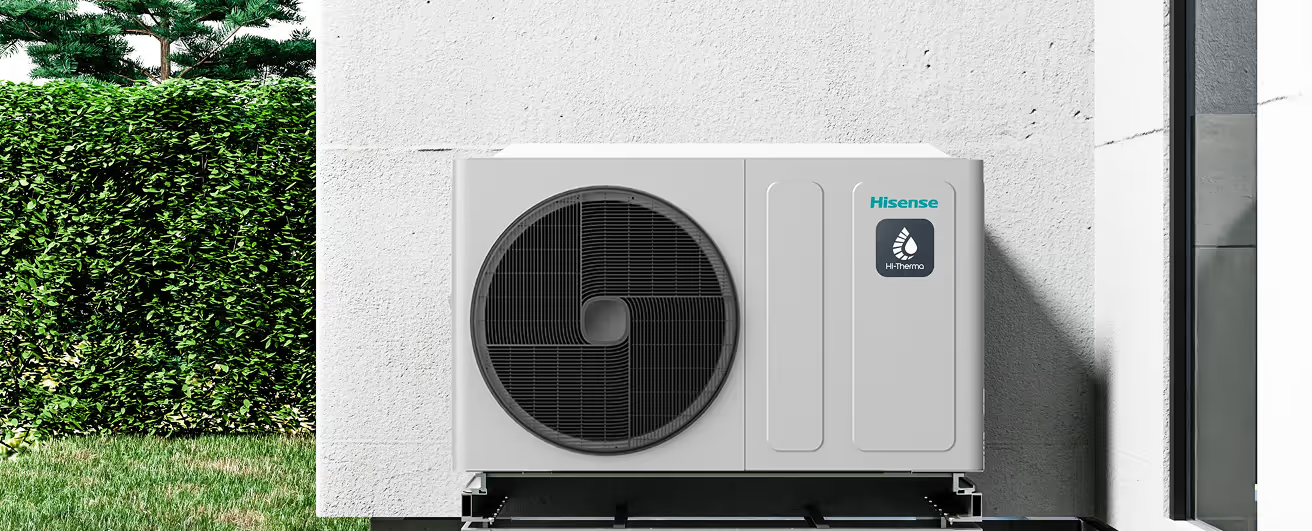
From the outside air to the comfort of your home
An air source heat pump extracts thermal energy from the outside air (even in winter) and transfers it indoors for heating, cooling, or domestic hot water. No combustion, no gases. Just physics.
COP is the ratio of heat produced to electricity consumed. A COP of 3.5 means 3.5 kWh of heat for every 1 kWh of electricity. The higher the COP, the lower your bill. Air source heat pumps are 3 to 4 times more efficient than conventional gas boilers.
Yes. Modern air source heat pump systems operate at full capacity down to -7 ºC and can function down to -20 ºC. At very low temperatures, the COP decreases, but the system continues to heat your home efficiently. The key is correct sizing and using low-temperature emitters (underfloor heating or fancoils) that maximize performance even on the coldest days of the year. We evaluate this in your free study.
The refrigerant absorbs energy from the outside air and turns into a gas.
An electric compressor significantly raises the gas temperature.
This heat is transferred to your home's heating or hot water circuit.
The refrigerant cools and depressurizes, ready to start the cycle again.
Five reasons to switch to an air source heat pump
A single system replaces your boiler, air conditioning, and water heater, consuming up to 4 times less energy than traditional alternatives.


Up to 4 times more efficient than a gas boiler
It moves heat instead of generating it, producing much more than it consumes in electricity.

Heating, cooling, and domestic hot water
A single system covers all your home's climate needs year-round. You eliminate the separate gas boiler and air conditioning unit.

No combustion, no gas, no risks
No gas, no fuel, no indoor CO₂ emissions. Reduce your home's heating carbon footprint by up to 70%.

Combine it with solar panels for total self-consumption
Air source heat pumps run on electricity, which your solar panels can produce. Schedule your heat pump during peak solar production hours and power it with your own energy.

Less maintenance than a boiler
Without combustion parts, there are fewer points of failure and fewer mandatory inspections. And with the Eltex Care Plan, we take care of everything.
Ways to lower your electricity bill forever.
The right heat pump depends on your home's layout and what you want to cover.
Air Source Heat Pump (Air-to-Water)
The comprehensive solution for heating and Domestic Hot Water (DHW). It connects to your home's circuit and replaces your gas boiler, being compatible with existing radiators and underfloor heating.Important: It only provides cooling if the system has fan coils or a radiant cooling floor.
Air Conditioning (Air-to-Air)
Ideal if you already have hot water covered and are looking for climate control without hydraulic work.Splits: Individual wall-mounted units for specific rooms.Ducted: Centralized installation to uniformly cover the entire home.
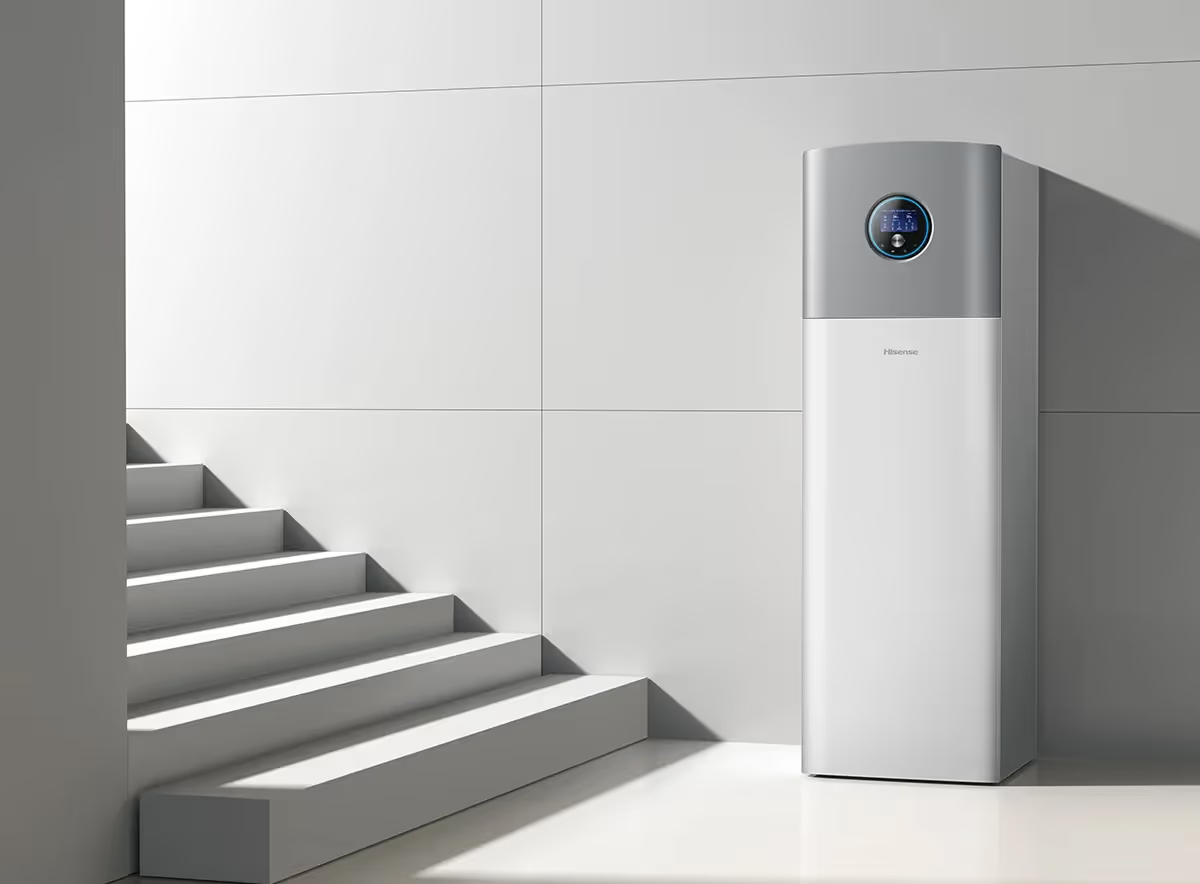
Types of heat pump systems
The right heat pump depends on your home's layout and what you want to cover.

Apartment or single-family home
Single-family homes are the ideal scenario. For apartments, it depends on the community regulations and the space available for the outdoor unit. Contact us for a definitive answer.

Renovation or new construction
Whether you're renovating or building from scratch, air-source heat pumps are the most efficient option. In new construction, the system design can be optimized from the outset.

Radiators or underfloor heating
With underfloor heating or fancoils, efficiency is maximized. With conventional radiators, adaptation may be required. We'll assess this in your free study.
Real savings and return on investment in air-source heat pumps
Data for a 120 m² home with underfloor heating in a temperate climate. Most households recover their investment in 3-8 years, sooner if subsidies are applied or if there's a gas boiler to replace. CAES grants can provide up to €3,000.
Air-source heat pumps and solar panels: where savings are real
Air-source heat pumps run on electricity. Solar panels produce it. Schedule your heat pump to run during peak solar generation hours, and you'll be powering it with energy you produce yourself. The hot water tank acts as a thermal battery: you charge it at midday with excess solar power and reduce grid consumption at night. The solar + heat pump combination is where the numbers truly add up.

Limitations and considerations
Air-source heat pumps are not the perfect solution for all homes as they are. Here are four aspects to review before deciding.
Poor insulation reduces efficiency
Heat pumps are more sensitive to heat loss than boilers. If your home loses heat easily, improving insulation first often yields better results than just changing the system.
Efficiency decreases with extreme cold
Systems operate down to -20 ºC, but performance decreases as temperatures drop. Correct sizing and low-temperature emitters (such as underfloor heating) maintain high performance.
The outdoor unit generates some noise
Modern units operate at 40-50 dB(A), similar to a quiet conversation. Placing them away from bedrooms and using anti-vibration mounts eliminates most disturbances.
Underfloor heating has thermal inertia
The system takes longer to reach the desired temperature than a boiler, but it maintains it more stably. Once running, comfort is very consistent and uniform.
How to install and maintain an air-source heat pump
Two units, new hydraulic installation. This is what is installed and how to keep it in perfect condition.
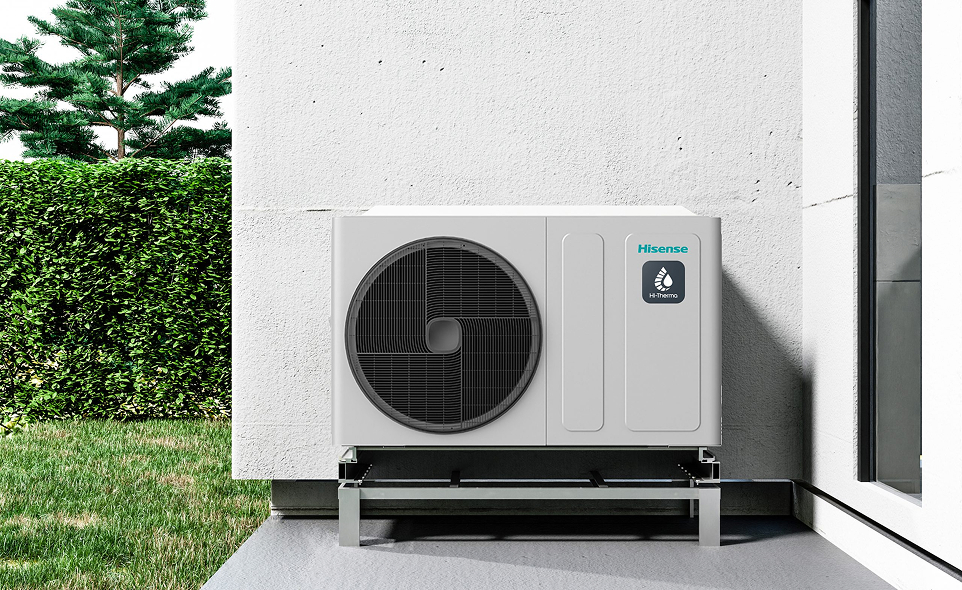
Outdoor unit
Fan, heat exchanger, and compressor. It captures thermal energy from the air and starts the cycle.
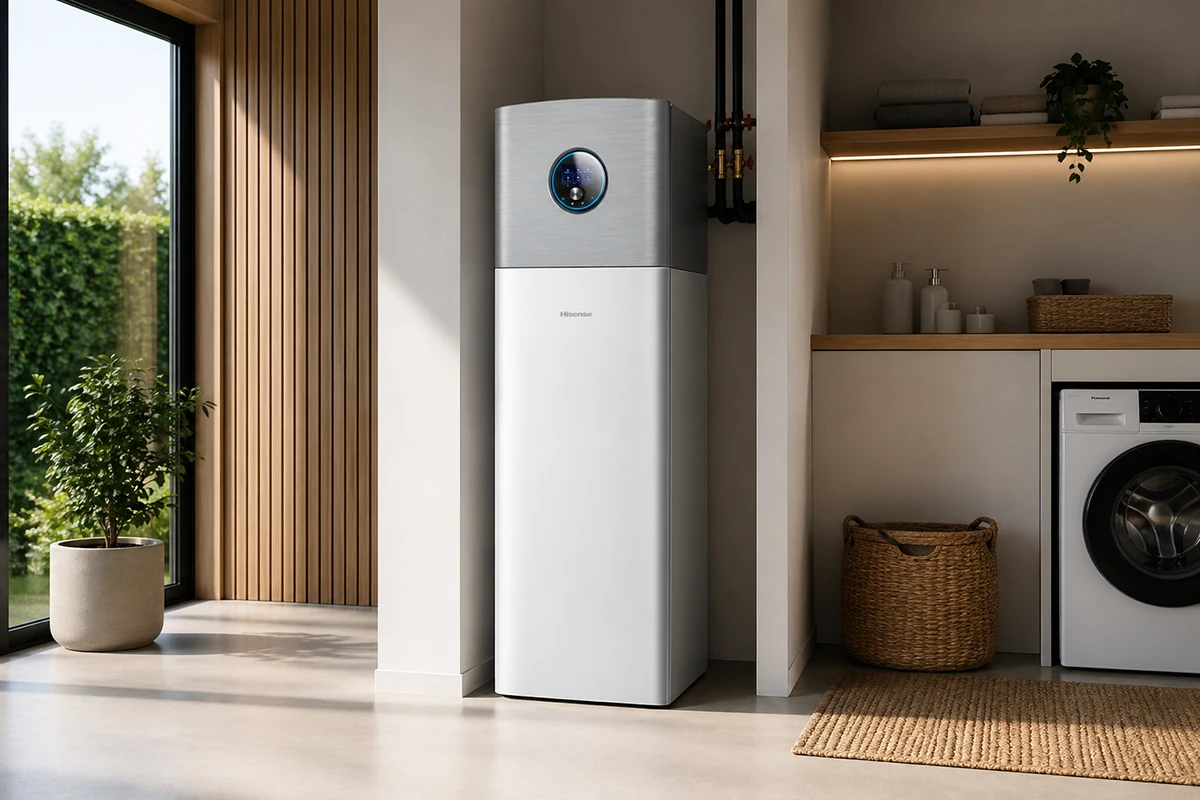
Indoor unit
Manages the hydraulic circuit (air-to-water systems). Distributes hot water to radiators, underfloor heating, and taps. With a storage tank, it also produces domestic hot water.
Periodically clean the outdoor unit of leaves, dust, and obstructions.
Check the water circuit pressure (air-to-water systems) and report any unexpected drops.
Regularly clean the filters (air-to-air systems) to maintain efficiency and air quality.



Are you ready to own your energy?
Let's get started and in just 2 months we can transform your home and start reducing your electricity bill
Eltex in the media


Questions?
We have the answers.
Aerothermal energy distributes heat or cold through systems such as underfloor heating, low-temperature radiators or fan coils. During winter, it extracts heat from the outside air and transfers it to the inside of the home. In summer, the cycle reverses: the system extracts heat from inside and expels it outside, providing efficient and sustainable cooling.
An aerothermal system can have a lifespan of between 20 and 25 years, as long as it is properly maintained.
Aerothermal energy uses the energy of the air to generate heat efficiently, and if it is powered by electricity from a photovoltaic installation, the system becomes even more sustainable and economical. This solution allows you to cover both heating and domestic hot water, drastically reducing dependence on traditional energy sources.
In most cases, yes. A typical family in a 120 m² home goes from spending around €1,300 a year on gas to around €500 in electricity — a saving of 30% to 60% depending on tariff and insulation. A gas boiler still makes sense if it's recent and gas is cheap in your area. If it's over 10 years old or your bills have risen two winters in a row, switching starts to pay off even without subsidies. At Eltex we calculate your exact break-even point with your own data before recommending anything.
Real savings depend on what you're replacing: compared to butane or heating oil, savings are typically 50–65%; compared to natural gas, 30–50%; compared to direct electric heating, 60–75%. In concrete terms, a 120 m² home with a heat pump uses around 4,000 kWh of electricity per year for heating, versus the equivalent of 13,300 kWh with a gas boiler. The average annual saving is between €700 and €1,300, depending on your electricity tariff.
An air source heat pump installation in a 120 m² home costs between €10,000 and €17,400, depending on the emitter system: around €10,000–€12,000 if existing radiators are adapted, and €15,000–€17,400 if underfloor heating is installed from scratch. Subtract the 2026 subsidies available — CAE grants, IRPF income tax deduction, and municipal tax rebates — and the net investment for many families falls to between €5,000 and €9,000.